
From UL GREENGUARD Gold to the Belgian Royal Decree, the Chinese panel manufacturer has now met the emission requirements of seven European and North American schemes - and is publishing the certificate numbers behind each one.

Xingang's biomimetic decorative panel has cleared seven international indoor air quality schemes. Image: Xingang Group
Shandong Xingang Group today announced that its 新港仿生精板 - marketed internationally as Xingang Biomimetic Decorative Faced Boards - has obtained seven international indoor-air and emissions certifications: UL GREENGUARD Gold (United States), Works with WELL product licence (International WELL Building Institute), CDPH testing under the California Department of Public Health, French A+, Finnish M1, German AgBB and the Belgian Royal Decree of 8 May 2014.
For specifiers and importers, the significance lies less in the number than in the frameworks involved. The seven schemes span voluntary health certifications used by architects, mandatory market-access regulations in the EU, and testing protocols cited by LEED and WELL. Passing one is common. Passing all seven at once leaves little room in the formulation.
What each certification actually measures
| Scheme | What it tests | Key threshold |
|---|---|---|
| French A+ | 28-day chamber test simulating a real home; formaldehyde, toluene, xylene and TVOC assessed individually | Formaldehyde as low as 10 µg/m³ |
| German AgBB | 28-day chamber monitoring plus the R-value health risk index | TVOC ≤ 1.0 mg/m³; carcinogens ≤ 0.001 mg/m³ |
| Works with WELL | Item-by-item review against WELL criteria, annual renewal | WELL v2, X06 VOC restrictions |
| UL GREENGUARD Gold | Screening of 12,000+ chemicals; 360+ VOC limits; sensitive populations | UL 2818 Gold |
| CDPH | 35 carcinogenic substances, GC-MS analysis against California exposure limits | CDPH Standard Method V1.2 |
| Finnish M1 | Chemical emissions and odour assessed separately - VOC, formaldehyde, ammonia | M1 best-in-class classification |
| Belgian Royal Decree | 170+ volatile organic compounds for floor coverings and related products | Binding condition of market entry |
French A+ - the toughest label in the EU rulebook
A+ is the highest emission class under France's mandatory labelling regulation. Testing simulates a real residential interior over 28 consecutive days, with formaldehyde measured as low as 10 µg/m³ - stricter than most European benchmarks. The scheme also sets individual limits for toluene, xylene and other compounds, with total volatile organic compounds assessed as a whole: a single failure disqualifies the product. French market authorities carry out spot checks on label claims, with fines and delisting for non-compliance.
German AgBB - clearance for direct indoor use
AgBB is the health-related evaluation scheme for building products run by the Committee for Health-related Evaluation of Building Products, and one of Europe's most rigorous emission assessment programmes. Chamber testing runs for 28 days, requiring TVOC of 1.0 mg/m³ or less and near-zero emissions of carcinogenic substances, together with an assessment of the R-value health risk index.
Works with WELL - a route into health-focused specifications
Works with WELL is the product licensing programme of the International WELL Building Institute, whose WELL standard has been applied across nearly 100,000 commercial and residential projects covering more than 6 billion square feet. Products are reviewed item by item against WELL criteria, subject to annual renewal, and listed in the official WELL product directory.
UL GREENGUARD Gold - built around sensitive occupants
GREENGUARD Gold screens a library of more than 12,000 chemicals against 360-plus VOC limits, and explicitly accounts for sensitive populations including children and the elderly. It is the reference certification for schools, healthcare facilities and other environments where indoor air quality requirements are highest.
CDPH - the reference method behind LEED and WELL
CDPH testing, developed by the California Department of Public Health, covers 35 carcinogenic substances and is widely treated as the reference method for indoor air quality, cited by both LEED and WELL. Xingang's panel was assessed under CDPH Standard Method V1.2-2017 as part of its UL verification.
Finnish M1 - emissions and odour, judged separately
M1 sets emission requirements at the level applied to food- and pharmaceutical-grade materials, and evaluates chemical emissions and odour separately, covering VOCs, formaldehyde and ammonia.
Belgian Royal Decree - where compliance is a legal condition
The Royal Decree of 8 May 2014 imposes legally binding indoor emission requirements on floor coverings and related products within its scope, covering more than 170 volatile organic compounds. For products in scope, compliance is a condition of market entry rather than a marketing claim.
Certificates available on request
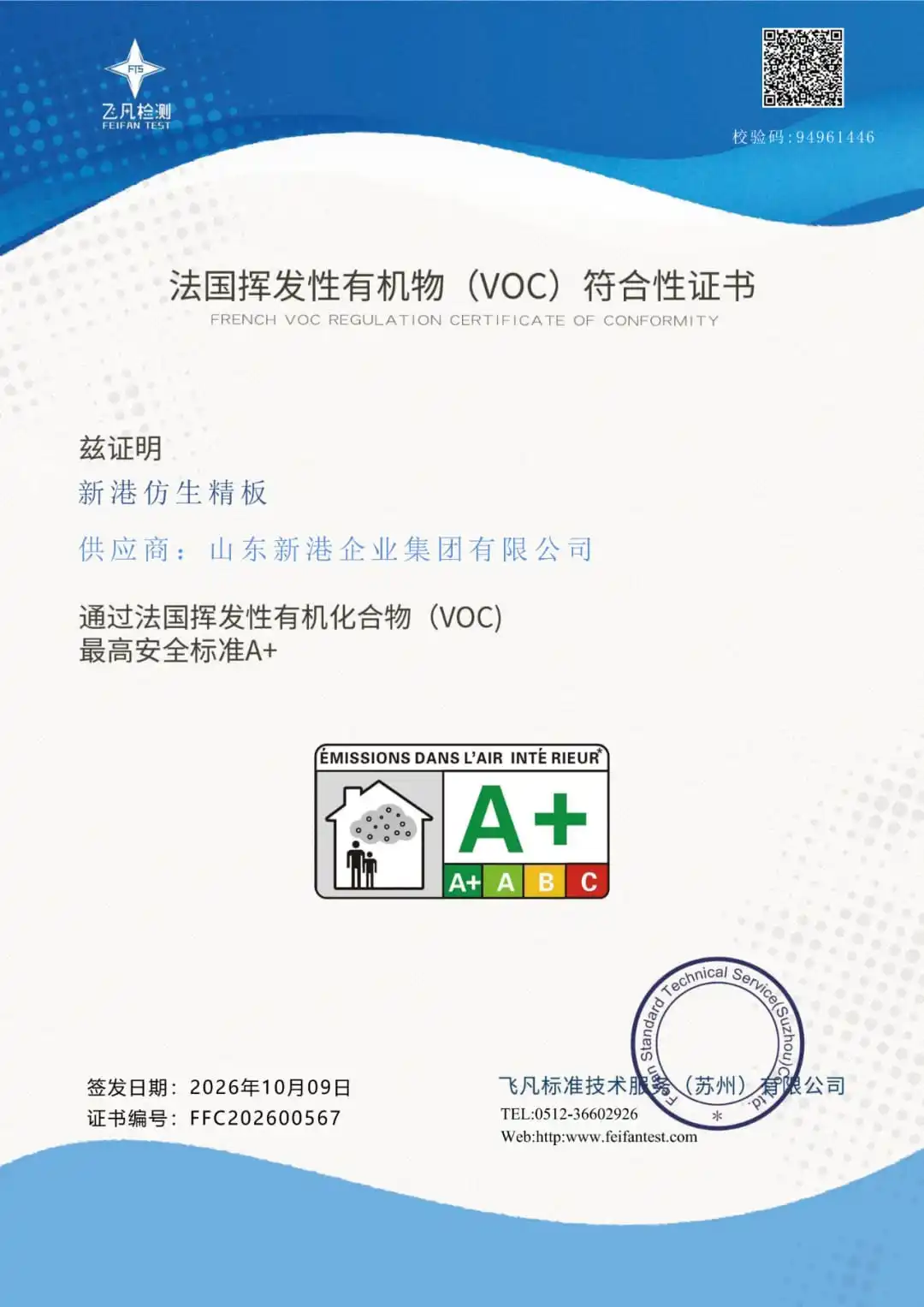
French A+ conformity certificate, no. FFC202600567, issued 9 October 2026.
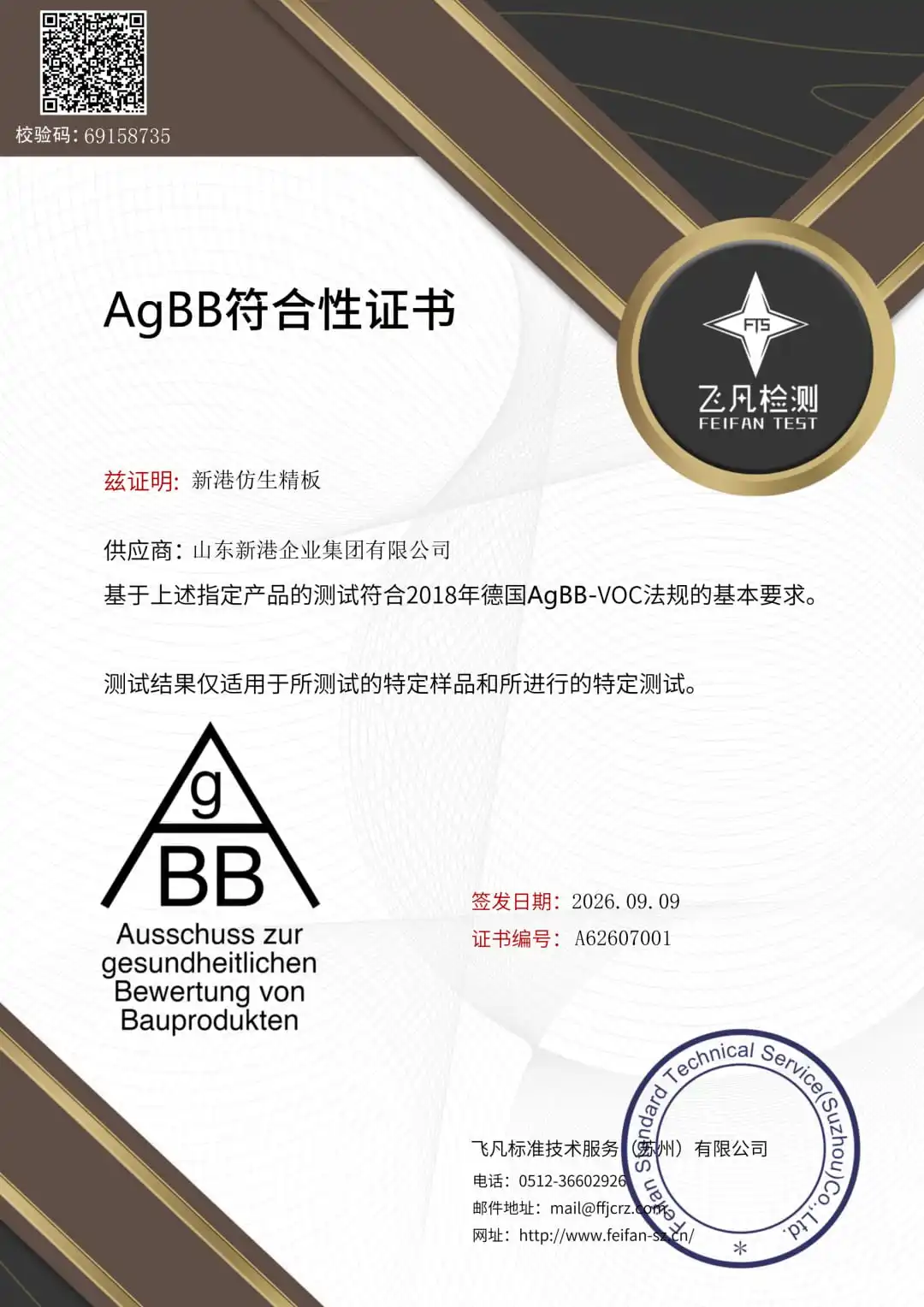
AgBB conformity certificate, no. A62607001, issued 9 September 2026.
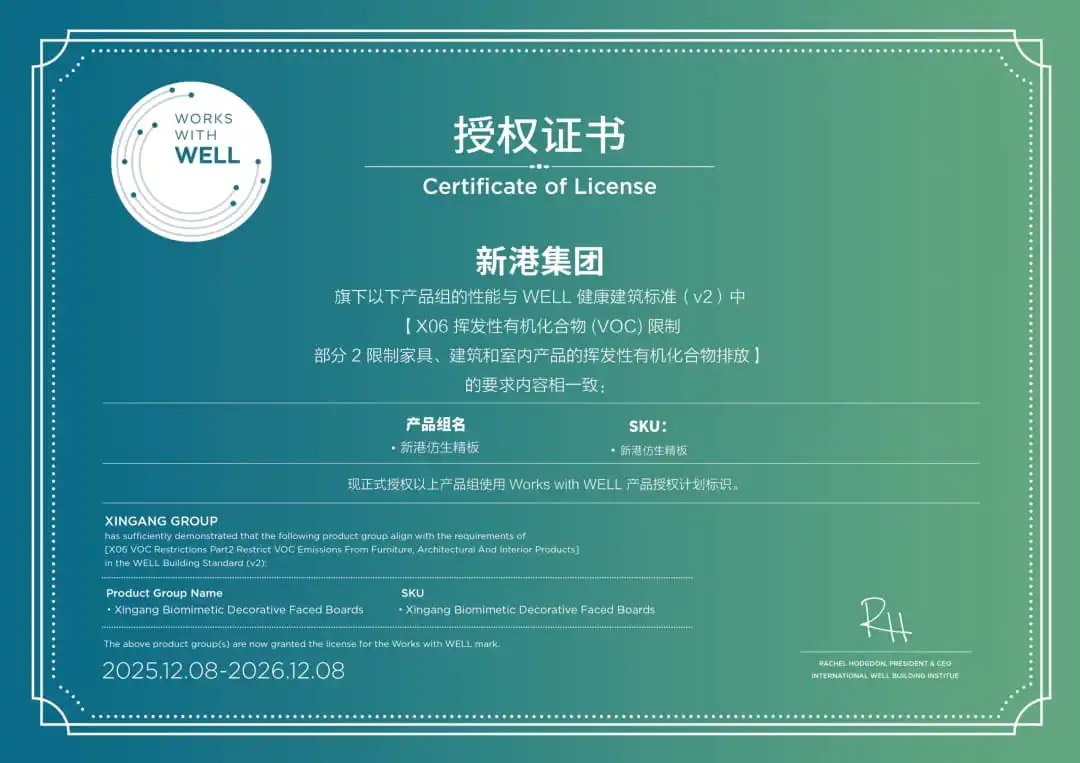
Works with WELL certificate of licence, WELL v2 / X06 VOC restrictions, valid to 8 December 2026.
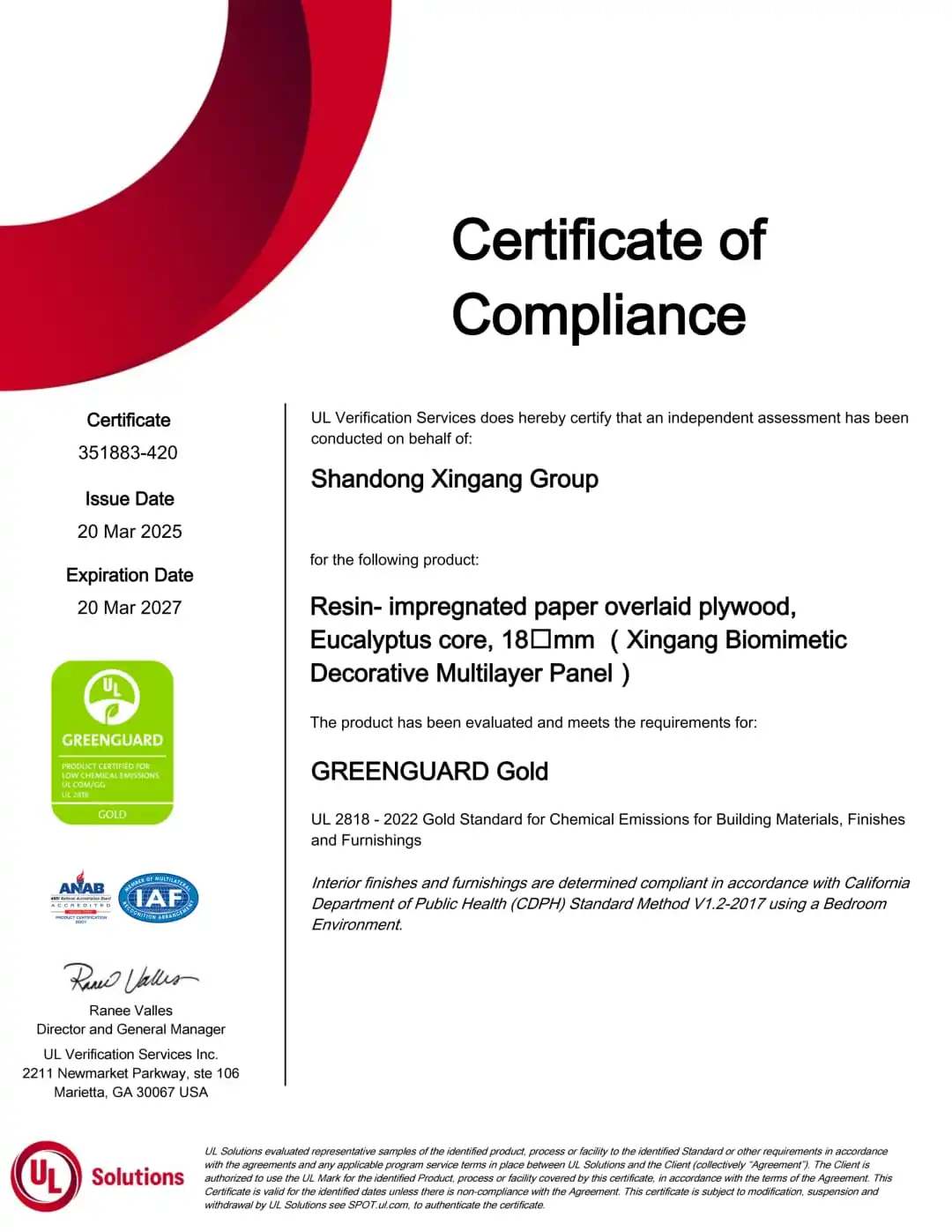
UL GREENGUARD Gold certificate of compliance, no. 351883-420, valid to 20 March 2027.
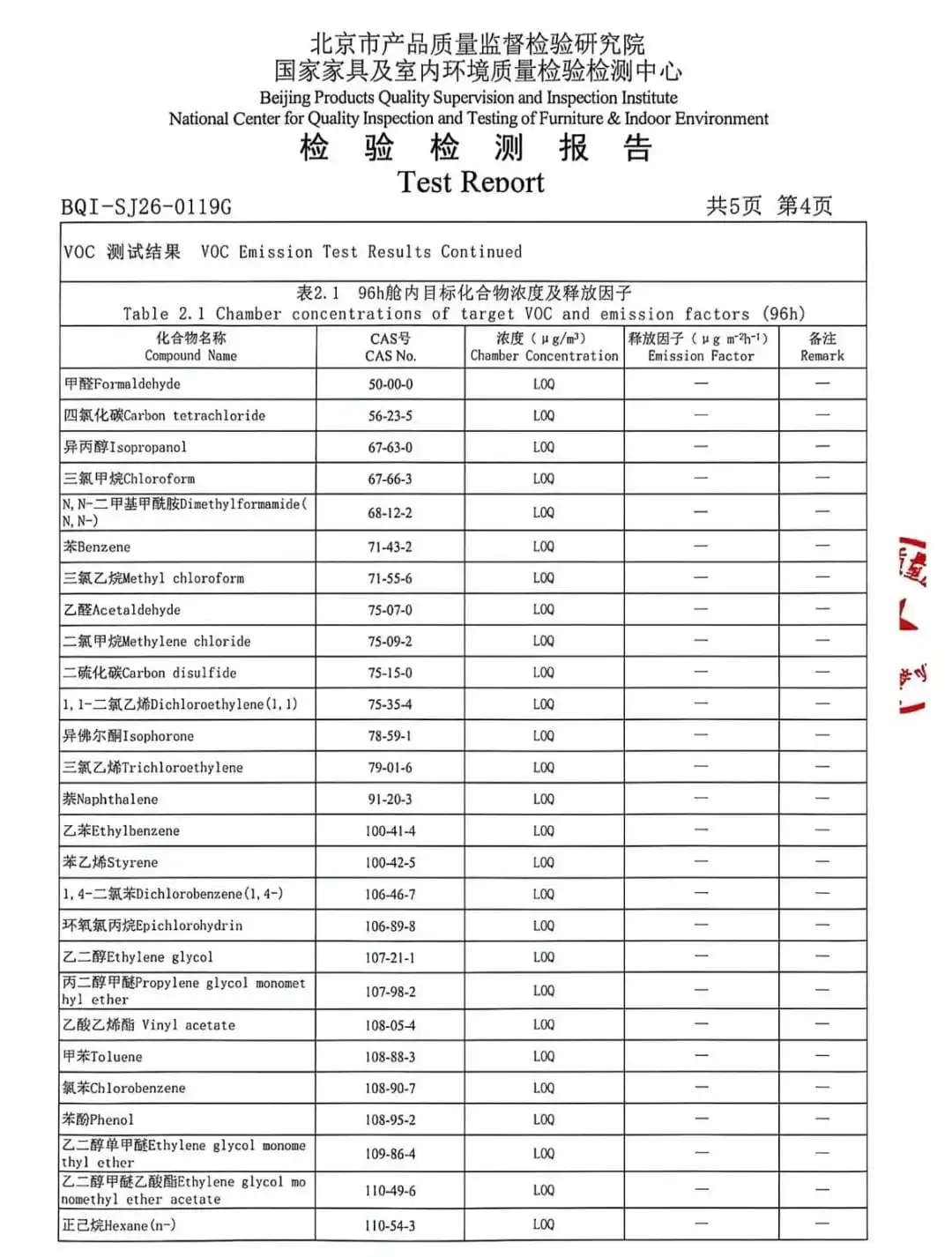
Independent VOC emission testing (report BQI-SJ26-0119G): formaldehyde, benzene, toluene, xylene and the other listed target compounds all returned results below the limit of quantification.
What it changes for buyers
- Tender documentation. A single panel can now supply certificates for French, German, Finnish, Belgian, US federal and California-referenced schemes, reducing the number of material substitutions needed on multi-market projects.
- Green building credits. CDPH and GREENGUARD Gold data feed directly into LEED and WELL indoor air quality submissions.
- EU market access. French A+ and the Belgian Royal Decree are regulatory requirements, not optional labels - compliance removes a common customs and retail objection.
About Shandong Xingang Group
Shandong Xingang Group (山东新港企业集团有限公司) is a Chinese manufacturer of engineered wood panels [ADD: founding year, production capacity, plant locations, export markets, annual output]. The company's biomimetic decorative panel range is positioned around indoor air quality and is supplied to furniture makers, interior fit-out contractors and distributors [ADD: key export markets].